

How to Travel as a Couple: 15 Tips to Avoid Arguments and Fall Even More in Love
Travel is one of the most rewarding experiences you can share with someone you love. It gives you the chance to explore new places, step away from daily routines, and create memories that last long after you've unpacked your suitcase. But as exciting as it is, traveling together can also reveal differences you may not notice at home.
From deciding where to eat to choosing how to spend the day, even the happiest couples can find themselves disagreeing when routines disappear and expectations collide. The good news is that these moments don't have to define your trip. With thoughtful planning, open communication, and a willingness to compromise, traveling together can strengthen your relationship and bring you even closer.
Whether you're planning your first vacation together, celebrating an anniversary, or preparing for your honeymoon, these practical tips will help you avoid common travel conflicts and focus on what matters most: enjoying the journey together.
Love Is Easy. Travel Isn’t Always.
Travel has a way of revealing the truth about a relationship. Not the dramatic kind of truth, but the quieter ones: who gets hungry first, who needs five more minutes to get ready, who thinks "let's relax" means lounging by the beach, and who secretly planned three museums before breakfast.
That is exactly why so many couples search for ways to travel together without conflict. Somewhere between the airport security line and the first hotel check in, even deeply connected partners find themselves navigating different sleep schedules, food preferences, spending habits, and travel styles.
The good news is that travel doesn't have to put your relationship to the test. In fact, it can do the opposite. When a trip is built around both people's needs instead of one person's preferences, it becomes an opportunity to communicate better, discover new sides of each other, and create unforgettable memories.
The goal isn't to have a perfect vacation. It's to have a meaningful one.
Why Couples Argue While Traveling
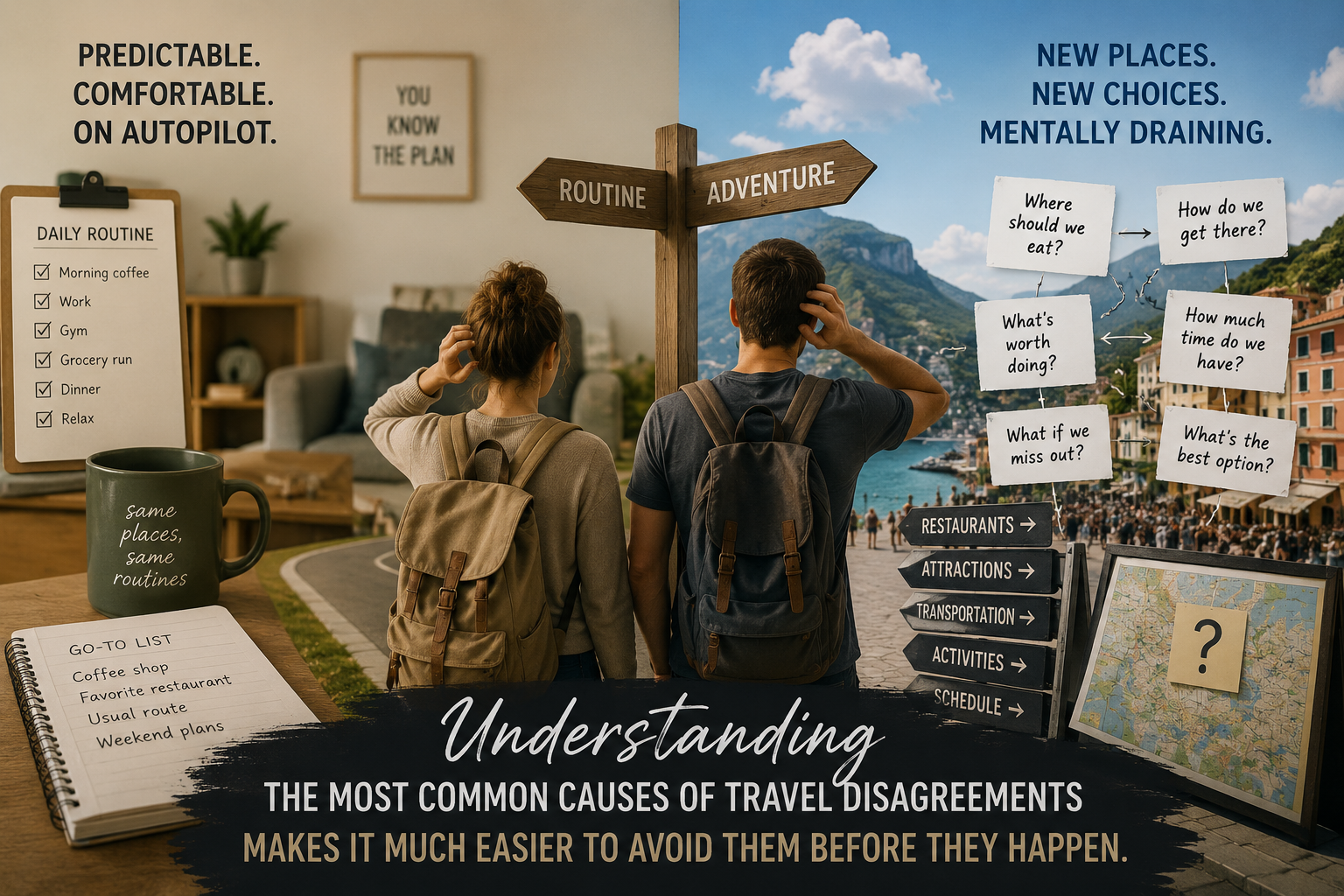
Travel removes the routines that make everyday life predictable. At home, you know where to eat, how to get around, and what your daily schedule looks like. On vacation, every decision is new, and that constant decision making can become mentally exhausting.
Understanding the most common causes of travel disagreements makes it much easier to avoid them before they happen.
➡️ Different Energy Levels
One partner may be excited to wake up early and make the most of every minute, while the other sees vacation as a chance to slow down and sleep in. Neither approach is wrong, but without discussing expectations beforehand, one person may feel rushed while the other feels held back.
A simple conversation before the trip about preferred wake-up times and daily schedules can prevent unnecessary frustration.
➡️ Different Travel Priorities
Ask two people what makes a great vacation, and you may get completely different answers.
One partner might dream of visiting every landmark, museum, and local attraction. The other may be happiest spending the afternoon at the beach with a good book and nowhere to be.
Trying to force one travel style onto the other often leads to disappointment. The most successful trips include a balance of sightseeing, relaxation, and free time.
➡️ Decision Fatigue
Vacation should feel relaxing, yet couples often spend hours making small decisions.
Where should we eat?
Should we book the excursion?
What time should we leave?
Do we walk or take a taxi?
After making dozens of choices every day, even simple questions can become stressful. Planning a few key details in advance while leaving room for spontaneity helps reduce this mental load.
➡️ Budget Differences
Money is one of the most common sources of conflict, whether at home or while traveling.
One partner may enjoy splurging on luxury restaurants and experiences, while the other prefers to save for future trips. These differences don't mean you're financially incompatible. They simply mean you have different comfort levels with spending.
Discussing your travel budget before booking anything helps both people feel confident about the choices being made.
➡️ Unexpected Travel Stress
Even the best planned vacations can include delayed flights, rainy weather, long lines, or lost luggage.
These situations are outside your control, but how you respond to them is entirely within your control. Couples who approach setbacks as a team often come away with funny stories instead of lasting frustration.
The biggest travel conflicts rarely come from major problems. They usually come from unmet expectations, too many decisions, and forgetting that you're on the same team.
So how do you stay on the same page and keep the trip drama-free?
① Decide the Purpose of the Trip Before You Book
Every memorable vacation starts with one important question:
Why are we taking this trip?
It sounds obvious, but many couples skip this conversation. One person assumes the trip will be a relaxing escape, while the other imagines a packed itinerary full of sightseeing and adventure. Both book the same destination but picture completely different vacations.
Before choosing flights or accommodations, spend a few minutes discussing what you each hope to get out of the experience.
Ask questions like:
Do we want to relax or stay busy?
Are we celebrating something special?
Is this a food-focused trip, a beach vacation, or a cultural adventure?
What's the one experience each of us doesn't want to miss?
How much free time do we want each day?
Your answers become the foundation for every planning decision that follows.
For example, if one partner dreams of exploring local neighborhoods while the other simply wants quiet afternoons by the pool, there's no need to choose between the two. Instead, build an itinerary that includes both. Perhaps mornings are dedicated to exploring, while afternoons are reserved for relaxing at the resort.
The goal isn't finding a vacation where both people do exactly the same thing all day. It's creating one where both feel excited about the experiences ahead.
② Talk About Money Before You Leave
Money conversations aren't always romantic, but they can save your vacation.
One of the fastest ways for resentment to build is when couples discover they have completely different expectations about spending after they arrive.
Instead of discussing finances during dinner on the first night, talk about them before you book anything.
Consider agreeing on:
An overall trip budget.
Your preferred accommodation style.
How often you'd like to dine at upscale restaurants.
Whether excursions are a priority.
A shopping budget for souvenirs.
An emergency fund for unexpected expenses.
If one partner enjoys luxury experiences while the other prefers to save money, look for opportunities to combine both approaches. Perhaps stay in a beautiful hotel but balance it with free local attractions, beaches, scenic walks, or public parks.
Setting expectations early removes uncertainty and allows both people to enjoy spending without wondering if they're making the other uncomfortable.
Remember, the goal isn't to spend the least or the most. It's to spend in a way that reflects your shared priorities.
③ Understand Each Other's Travel Style
No two people travel exactly the same way.
Understanding your partner's travel personality helps explain many disagreements before they even happen.
If one partner is...And the other is...A balanced approachA plannerSpontaneousPlan one or two key activities each day and leave the rest flexible.An early riserA night owlSchedule shared activities in the late morning or afternoon.An adventure seekerRelaxation focusedAlternate active days with slower resort days.Budget consciousLuxury orientedChoose one or two premium experiences while keeping other days simple. Food enthusiastLess adventurous eaterMix local restaurants with familiar dining options.
Rather than trying to change each other's preferences, look for ways to combine them.
Some of the most memorable vacations happen because each partner introduces the other to experiences they might never have chosen alone.
The person who loves museums may discover that relaxing by the ocean is exactly what they needed. The beach lover may end up finding a favorite local café hidden near a historic landmark.
Curiosity creates connection.
④ Share the Planning Responsibilities
Planning an entire vacation is exciting, but it can also become overwhelming when one person carries all the responsibility.
Researching flights, comparing hotels, making reservations, organizing transportation, and tracking budgets requires time and mental energy. When only one partner manages every detail, they may feel more like a travel coordinator than someone looking forward to a vacation.
Instead, divide responsibilities based on each person's strengths and interests.
For example:
TaskSuggested ResponsibilityResearch flightsOne partnerChoose accommodationsOther partnerRestaurant recommendationsTogetherDaily activity ideasTogetherTransportation planningOne partnerBudget trackingShared
Working together also creates excitement before the trip begins. Browsing restaurants, choosing activities, or discovering hidden gems becomes part of the vacation experience itself.
Most importantly, shared planning creates shared ownership. If plans need to change because of weather or unexpected delays, neither person feels solely responsible.
After all, the vacation belongs to both of you, and planning it should too.
⑤ Don't Overschedule Every Day
When planning a vacation, it's tempting to fill every hour with attractions, tours, restaurants, and activities. After all, you want to make the most of your time away. But trying to see everything often leaves couples feeling rushed instead of refreshed.
One of the easiest ways to reduce travel stress is to give your itinerary room to breathe.
Rather than planning from sunrise until bedtime, consider building each day around one major activity. That could be a guided tour, a snorkeling excursion, a visit to a historic site, or a day at a theme park. Everything else can naturally fit around it.
A balanced day might look like this:
Morning
Enjoy breakfast together and visit a local attraction or join a guided excursion.
Afternoon
Relax by the pool, take a leisurely walk, browse local shops, or enjoy a quiet café.
Evening
Share a romantic dinner, watch the sunset, or experience local entertainment.
Leaving unscheduled time doesn't mean you're wasting your vacation. In fact, some of the most memorable travel moments happen when you're not following an itinerary at all. You might discover a hidden bookstore, stumble across a local festival, or simply enjoy an unhurried conversation while watching the waves.
Remember, your vacation isn't a checklist. It's an experience.
⑥ Expect the Unexpected
Even the best planned vacations come with surprises.
Flights get delayed.
Weather changes without warning.
Restaurants close unexpectedly.
Traffic causes missed reservations.
Luggage occasionally takes a different route than you do.
While you can't control these situations, you can control how you respond to them.
Instead of viewing travel hiccups as disasters, try treating them as part of the adventure. A delayed flight might become an excuse to enjoy a long breakfast together. A rainy afternoon could turn into a relaxing spa visit or an afternoon discovering a cozy café.
When something goes wrong, ask yourselves one simple question:
"Will this matter a year from now?"
Most of the time, the answer is no.
Couples who stay flexible often discover that the stories they laugh about most are the ones that didn't go according to plan.
Approaching challenges as teammates rather than opponents makes every obstacle feel smaller.
⑦ Make Space for Time Apart
It may seem surprising, but spending every minute together isn't always the secret to a successful couple's vacation.
Healthy relationships thrive when both people have room to recharge in ways that feel natural to them.
Perhaps one partner wants to enjoy a morning workout while the other prefers sleeping in. Maybe one loves browsing local markets while the other would rather relax with a book by the pool.
Both experiences are perfectly valid.
Giving each other permission to enjoy a little independent time doesn't take away from the vacation. Instead, it often makes your shared experiences even more meaningful.
Some simple ways to build in personal time include:
Enjoying separate morning routines before meeting for breakfast.
Visiting the spa while your partner explores nearby shops.
Reading by the beach while the other goes for a swim.
Taking an evening walk alone before dinner.
Spending an hour apart can give you both new stories to share and a renewed appreciation for each other's company.
Quality time is often more valuable than constant togetherness.
⑧ Learn How to Handle Disagreements While Traveling
Even with careful planning, small disagreements are inevitable.
Maybe someone underestimated walking distances.
Perhaps one person is tired while the other wants to keep exploring.
Or maybe you're both simply hungry after a long day.
The important thing isn't avoiding every disagreement. It's knowing how to respond when one happens.
Instead of trying to win the argument, focus on solving the problem together.
A few simple habits can make a significant difference:
Pause before reacting.
If emotions are running high, take a few minutes to cool down instead of continuing the conversation immediately.
Avoid assigning blame.
Replacing "You always..." with "I think we're both getting tired" keeps the conversation collaborative instead of confrontational.
Check basic needs first.
Many travel disagreements disappear after eating a meal, drinking water, or taking a short break.
Be willing to adjust the plan.
Not every reservation or itinerary needs to be followed perfectly. Sometimes changing plans is the best decision you can make.
Remember that you're not competing against each other. You're working together to make the trip enjoyable for both of you.
⑨ Keep the Romance Part of the Itinerary
It's easy to become so focused on logistics that you forget why you're traveling together in the first place.
Between airport transfers, restaurant reservations, attraction tickets, and navigating unfamiliar places, romance can unintentionally become an afterthought.
Instead, make meaningful moments part of your plans.
They don't need to be extravagant to be memorable.
Consider including experiences like:
Watching the sunrise or sunset together.
Booking a couples massage.
Planning one special dinner during the trip.
Having a picnic in a scenic location.
Taking a walk after dinner without checking your phones.
Writing each other a short note to read during the vacation.
Trying an activity that's new for both of you.
You can also surprise your partner with a thoughtful gesture.
It might be reserving their favorite restaurant, arranging flowers in the room, booking an excursion they've always wanted to experience, or simply ordering dessert to celebrate being together.
These moments don't have to cost much. What makes them meaningful is the intention behind them.
Years from now, you probably won't remember every attraction you visited or every meal you ate.
You'll remember laughing together after getting lost in a charming neighborhood, sharing quiet conversations on a balcony overlooking the ocean, or watching the sunset with nowhere else you needed to be.
Those are the memories that turn a vacation into a lasting chapter of your relationship.
⑩ Choose Accommodations That Make Travel Easier
Where you stay can have just as much impact on your vacation as the destination itself.
A beautiful hotel or resort doesn't just provide a place to sleep. It shapes your daily routine, influences your stress level, and often determines how much time you spend enjoying your trip versus solving logistical challenges.
When choosing accommodations, think beyond the room itself.
Ask questions like:
Is the location convenient for the activities we want to do?
Are restaurants, beaches, or attractions within walking distance?
Does breakfast come included?
Is there enough space for both of us to relax comfortably?
Are there amenities we'll actually use, such as a spa, pool, fitness center, or adults only areas?
For many couples, all inclusive resorts can simplify the experience even further. Meals, drinks, entertainment, and activities are already included, reducing the number of decisions you need to make throughout the day. Instead of wondering where to eat or how much each activity costs, you can focus on enjoying your time together.
The best accommodations aren't always the most luxurious. They're the ones that support the type of vacation you want to have.
⑪ Choose a Destination That Fits Both of You
Not every destination suits every couple.
A city known for museums and architecture may be perfect for travelers who enjoy history and culture, while others may find greater happiness on a quiet beach with few plans and plenty of sunshine.
Rather than asking, "Where should we go?" ask, "What kind of vacation do we want?"
Here are a few ideas based on different travel styles:
For couples who want to relax
Look for destinations with beautiful beaches, luxury resorts, spa experiences, and slower-paced itineraries. Caribbean islands, tropical escapes, and adults only resorts are excellent choices for reconnecting without feeling rushed.
For adventurous couples
Choose destinations known for hiking, snorkeling, diving, wildlife experiences, or outdoor adventures. National parks, mountain towns, and island destinations with water activities offer plenty of opportunities to explore together.
For food lovers
Cities with vibrant culinary scenes allow couples to experience local culture through cooking classes, food tours, farmers' markets, and neighborhood restaurants.
For culture and history enthusiasts
Historic cities offer museums, architecture, guided tours, and local traditions that create meaningful travel experiences while allowing plenty of opportunities to slow down between attractions.
If you have different travel styles, look for destinations that naturally offer a mix of experiences. A coastal city, for example, might combine beaches, shopping, historic neighborhoods, and excellent dining, giving each partner something to look forward to.
The destination should inspire both of you, not just one of you.
⑫ Check In With Each Other Every Day
Communication doesn't stop once the vacation begins.
In fact, taking a few minutes each day to check in with each other can prevent small frustrations from becoming bigger problems.
A daily conversation doesn't need to be serious or lengthy. It can happen over breakfast, during an evening walk, or while relaxing before bed.
Ask simple questions like:
What was your favorite part of today?
Is there anything you'd like to do differently tomorrow?
Are you feeling relaxed, or would you prefer a slower day?
Is there something you've been hoping we could do together?
These conversations create space for honesty without making either person feel criticized.
They also remind you that the vacation isn't just about seeing new places. It's about sharing those experiences with someone you care about.
The more connected you feel to each other, the less likely small inconveniences are to affect your overall trip.
⑬ Accept That Perfect Trips Don't Exist
Many travelers unknowingly create unrealistic expectations.
Every photo looks flawless.
Every sunset appears magical.
Every itinerary seems perfectly planned.
Real travel is different.
There will probably be a delayed flight.
You may take a wrong turn.
It might rain on the day you planned to visit the beach.
You could discover that the restaurant everyone recommended isn't actually your favorite.
None of these moments mean the trip was unsuccessful.
In fact, they're often the moments that become your favorite stories.
Years later, you're far more likely to laugh about getting caught in a rainstorm or accidentally ordering something you couldn't pronounce than you are to remember every attraction you visited.
Instead of chasing perfection, focus on being present.
Travel becomes more meaningful when you stop comparing it to an ideal version that only exists online.
⑭ Remember That You're on the Same Team
When stress builds, it's easy to slip into thinking of the disagreement as you versus your partner.
Instead, try viewing it as both of you versus the situation.
Maybe the airport is crowded.
Maybe your flight was delayed.
Maybe you're both tired after walking all day.
Those circumstances aren't anyone's fault.
The strongest couples approach challenges with a shared mindset.
Instead of asking, "Who's right?" ask, "How can we make the rest of today better?"
Sometimes the answer is taking a break.
Sometimes it's changing plans.
Sometimes it's simply laughing about how unpredictable travel can be.
The destination matters, but how you treat each other along the way matters even more.
⑮ Focus on the Memories, Not the Itinerary
When your vacation ends, you probably won't remember every reservation time or every attraction you visited.
You'll remember dancing together to live music.
Sharing dessert after dinner.
Watching the sunrise from your balcony.
Getting lost in a neighborhood that wasn't on the itinerary.
Laughing over a mistake that felt stressful at the time.
The best trips aren't measured by how much you accomplish. They're measured by how they make you feel.
A successful couple's vacation isn't about seeing everything.
It's about experiencing something meaningful together.
ADDITIONAL TIP:
Before you leave, take a few minutes to make sure you've covered the essentials. Click here to view The CARE Travel Couples Travel Checklist: Everything You Need to Plan a Stress-Free Romantic Getaway.
Make Your Next Couple's Vacation Effortless
Every couple travels differently, and that's what makes traveling together so rewarding. Each trip is an opportunity to learn more about one another, discover new places, and create memories that become part of your shared story.
The most memorable vacations aren't built around packed itineraries or checking off every attraction. They're thoughtfully planned around the people taking them. When your destination, accommodations, and experiences reflect both partners' travel styles, there's less time spent worrying about logistics and more time enjoying each other's company.
At CARE Travel, we believe exceptional vacations begin long before you board your flight. Whether you're planning a honeymoon, celebrating an anniversary, or simply looking to reconnect, our personalized travel planning helps create journeys that balance relaxation, adventure, and meaningful experiences. From selecting the right destination to designing an itinerary that works for both of you, we're here to make every step of your vacation as seamless as possible.
After all, the best souvenirs aren't the ones you pack in your suitcase. They're the memories you create together.
Connect with us and let's start planning.